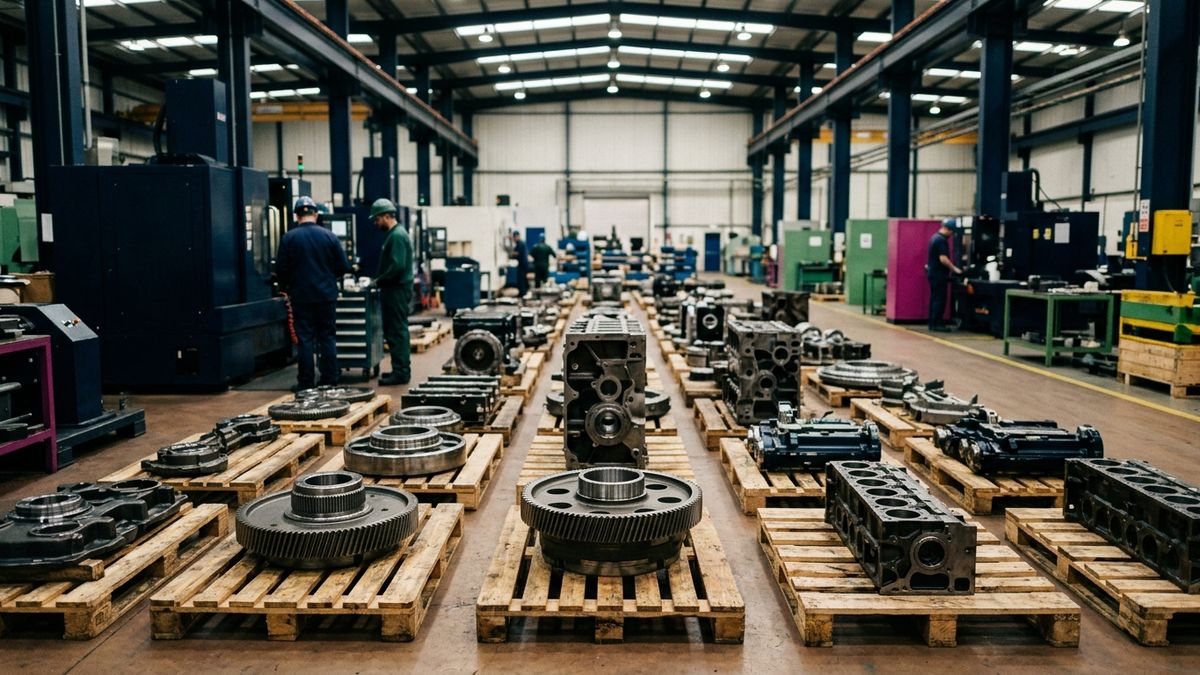
U.S. factory orders surprised to the upside in July, fueled by a potent mix of tax-incentivized capital expenditures and hyperscaler panic buying. Wall Street sees a domestic manufacturing renaissance. The actual manufacturers building this infrastructure, however, are screaming about aluminum tariffs. Welcome to the great industrial margin squeeze of 2026, where subsidized demand is colliding violently with penalized supply.
The Capex Collision Course
The macro narrative is clean: artificial intelligence requires unprecedented power, and cloud providers are writing blank checks to get it. Cumulative data center and AI investment is projected to reach an absurd $5.3 trillion by 2030 . That tidal wave of hyperscaler cash is pushing annual IT and facility equipment spending toward the $1 trillion mark by 2030 .
But heavy machinery, cooling units, and switchgear require raw materials. Right now, domestic Industrial Machinery manufacturers are trapped. On one side, federal tax incentives are pulling forward billions in infrastructure demand. On the other, aluminum tariffs are actively punishing the U.S. companies that forge the cooling systems and power racks necessary to keep foundational models running. You cannot build a localized grid out of software.
Sizing the Grid Bottleneck
It takes more than silicon to train a model—it takes localized power generation and heavy electrical equipment. By 2035, U.S. AI data center power demand could balloon thirtyfold to 123 gigawatts . The equipment makers servicing this demand, like ABB Ltd (ABBNY) and Schneider Electric (SBGSY), are sitting on massive multi-billion-dollar backlogs.
But backlogs are only as good as the margins they eventually yield. When Q3 and Q4 earnings roll around, the market's focus will shift entirely to conversion. Investors need to see if these industrial giants are absorbing the tariff-inflated cost of aluminum, or if they possess the pricing power to pass those costs through to hyperscalers (whose own CapEx budgets are starting to face intense scrutiny).
Subsidies, Tariffs, and the Balance Sheet Divide
The divergence across the supply chain is violent, splitting the sector between highly visible infrastructure plays and cash-starved micro-caps.
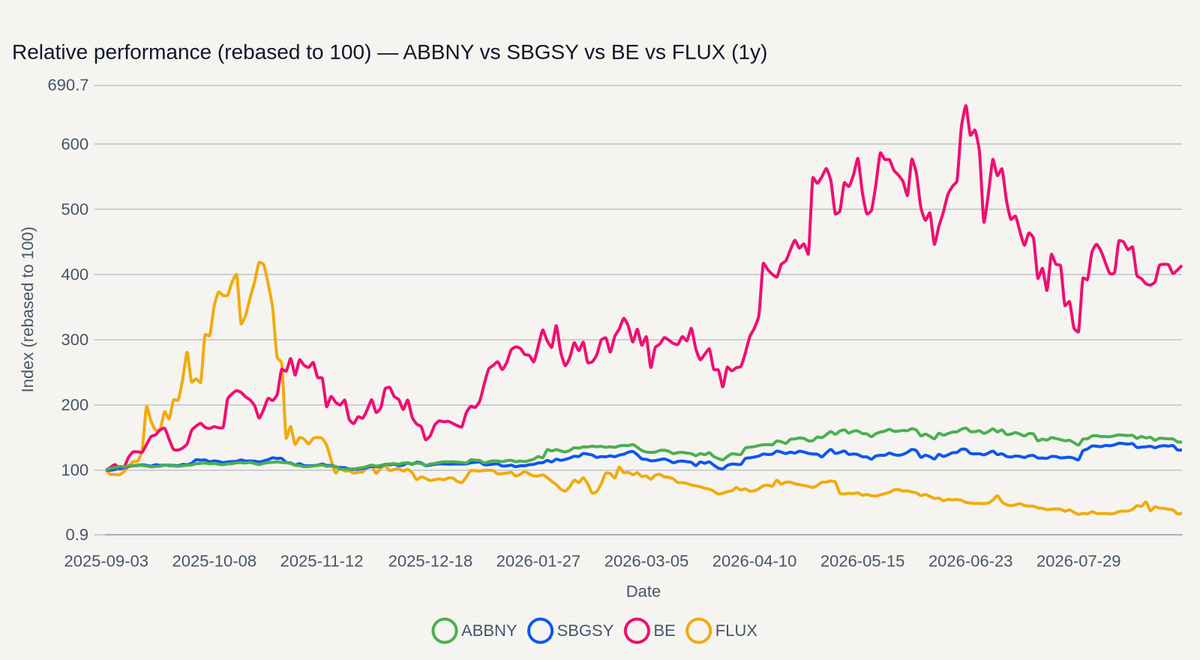
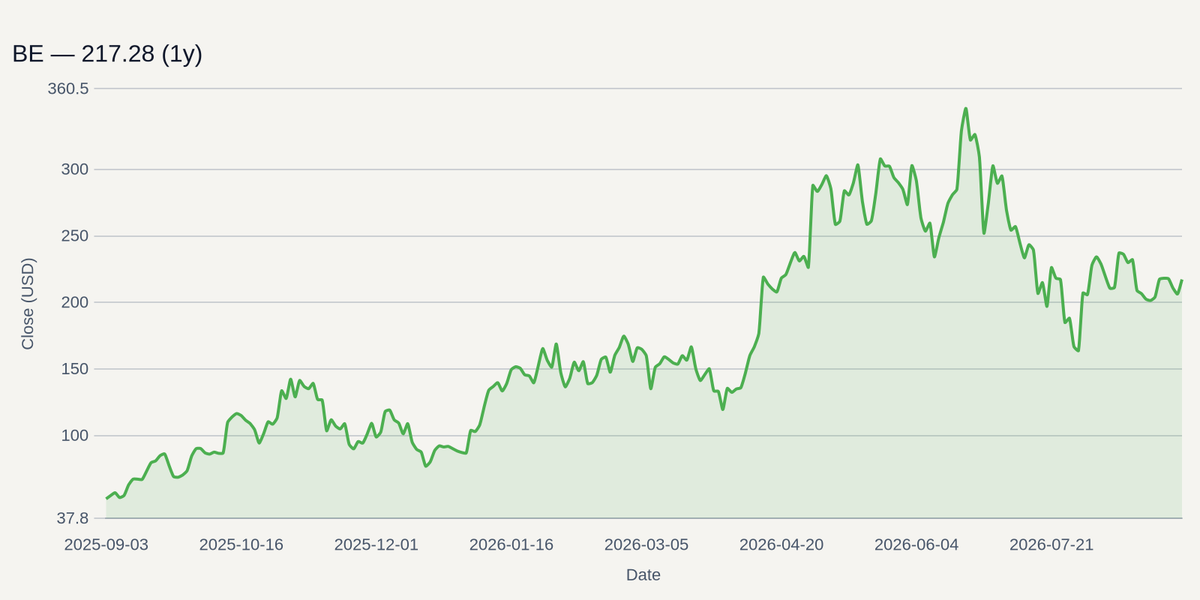
Take Bloom Energy (BE), which provides off-grid fuel cell infrastructure. The market is aggressively bidding up off-grid solutions as data centers face severe grid constraints. But trading at a rich multiple north of 280x trailing earnings, the stock is hyper-sensitive to policy shifts. Under the current administration, the risk of structural cuts to Inflation Reduction Act (IRA) tax credits threatens to compress multiples across the clean-energy board. If federal subsidies are slashed, the cost of grid independence skyrockets, risking a severe de-rating even if underlying data center demand remains robust.
Meanwhile, the micro-cap end of the pool is fighting a different war. Cyclical hardware players like Flux Power (FLUX) are staring down an imminent liquidity wall. Despite the broader AI infrastructure boom, sustained negative operating cash flows and capex starvation from key customers have FLUX leaning on deeply dilutive equity financing facilities just to stay afloat. If a supplier cannot convert orders to cash in the middle of a $1 trillion supercycle, they will not survive the inevitable inventory digestion phase.