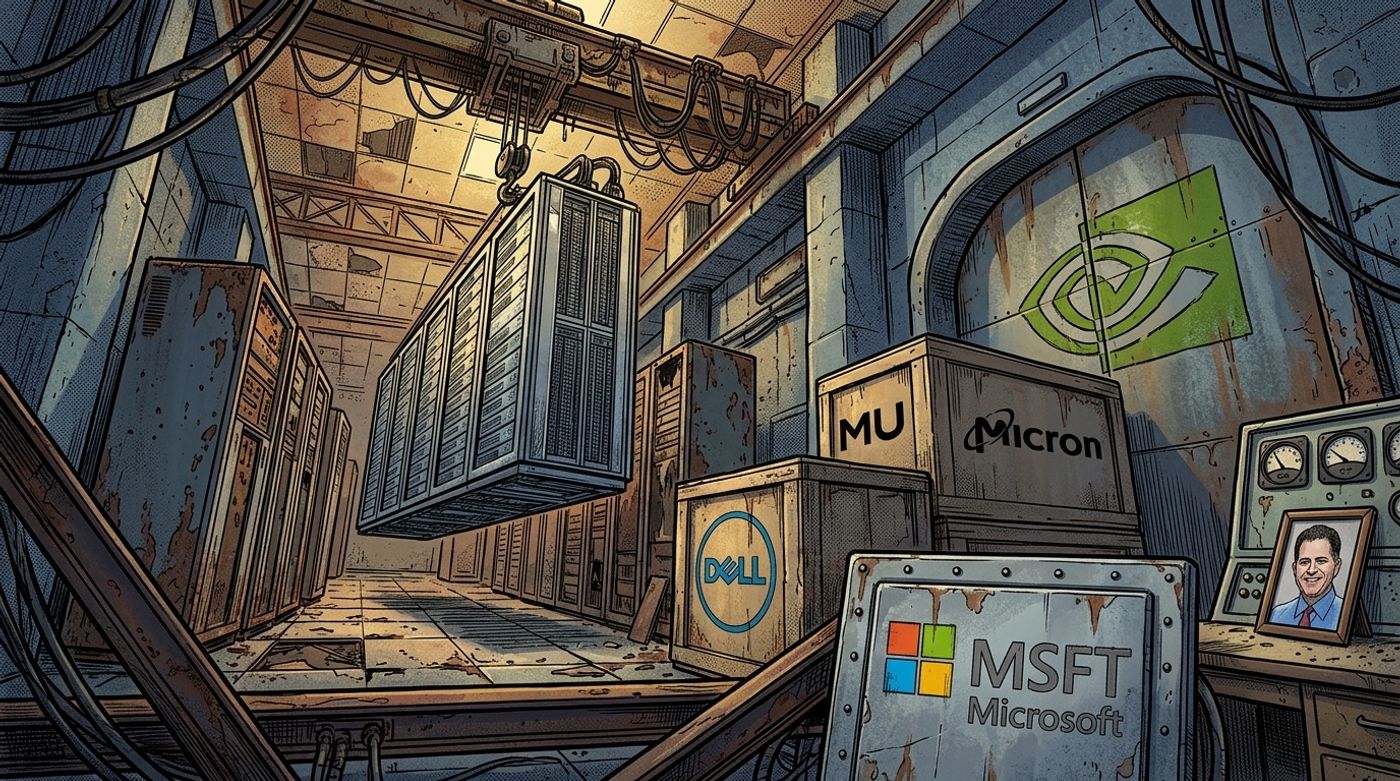
The enterprise AI hardware cycle isn't dead, but it is currently stuck in traffic. After a euphoric year of hoarding compute, the market is finally waking up to the physical integration wall: procuring advanced GPUs is easy, but actually powering and cooling them inside legacy corporate data centers is a logistical nightmare.
This week’s brutal repricing across the data center complex—anchored by an 11% plunge in DELL and widespread downgrades of legacy original equipment manufacturers (OEMs)—acts as the canary for a messy digestion phase. The narrative that every Fortune 500 company would seamlessly transition to AI-native infrastructure overnight has collided with the physical reality of building out the necessary electrical plumbing.
Masking the lag with memory premiums
For the past two quarters, Wall Street looked at the massive top-line revenue growth at hardware OEMs and saw a structural AI inflection. Strip away the PR, however, and the reality is far more mechanical. Much of that revenue expansion was simply the pass-through of heavily inflated memory prices, not a true volume explosion in AI server deployments.
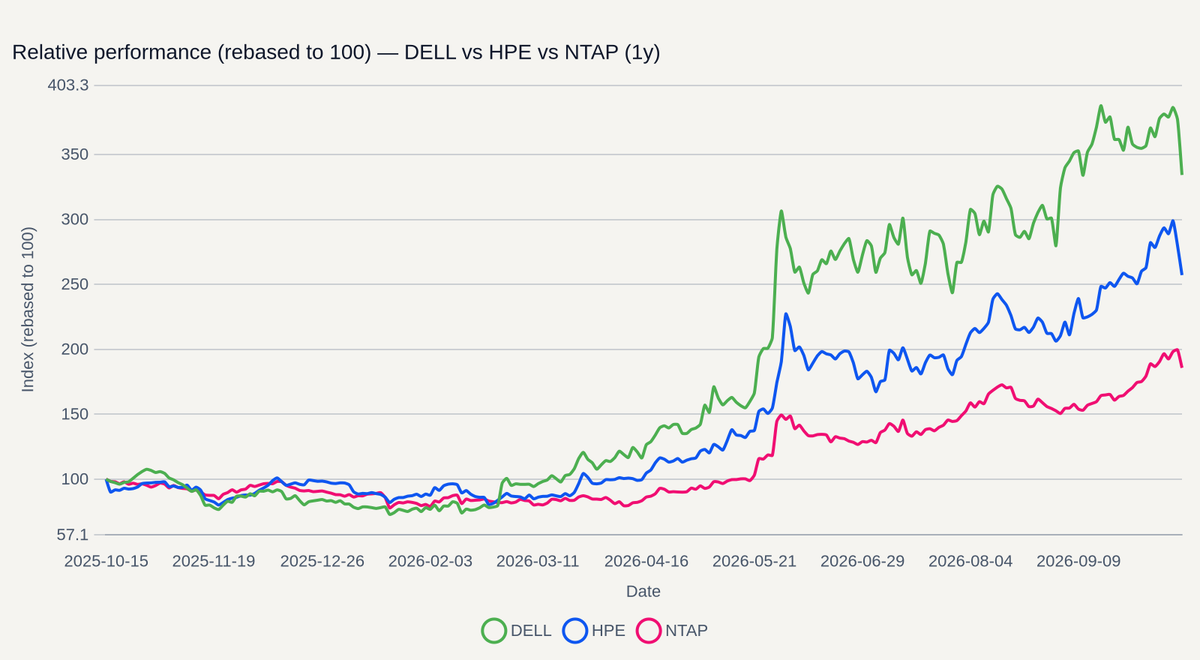
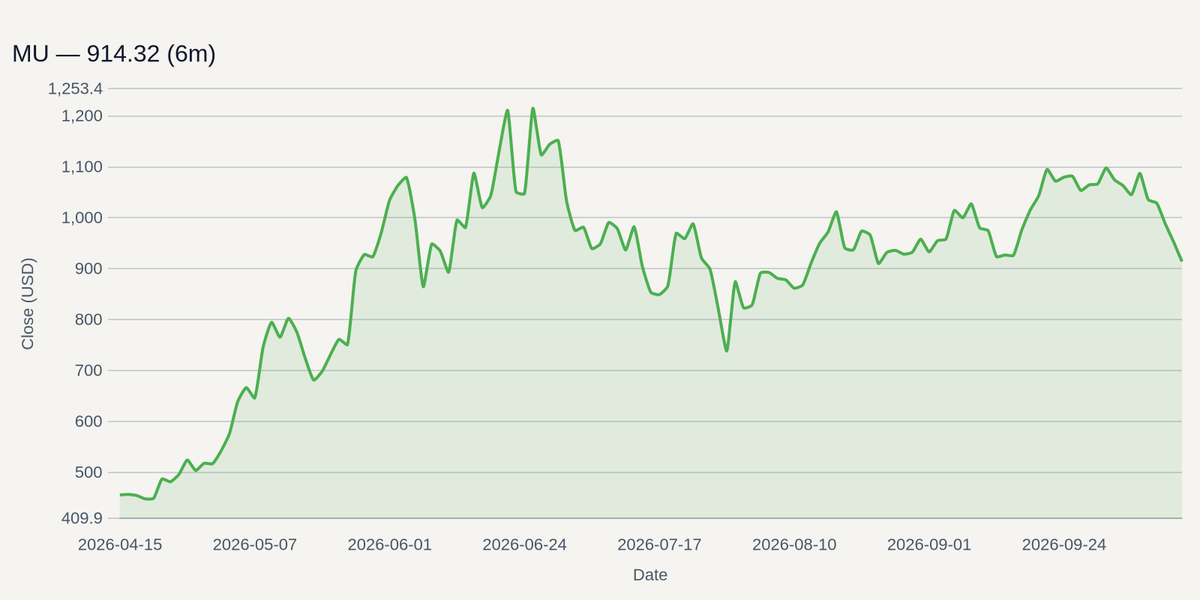
When the underlying cost of DRAM and NAND surges, the sticker price of a fully integrated server goes up. This dynamic artificially pads enterprise revenue figures, masking a much slower true adoption curve for localized AI hardware. Now, with Chinese memory suppliers like CXMT pushing new architectures and South Korean memory giants taking a hit overnight, markets are bracing for that pricing power to crack—even as physical contract prices remain near cyclical highs.
If memory costs normalize, the top-line revenue illusion for OEMs vanishes. In the meantime, the current supply crunch is fundamentally altering purchasing timelines. Rising component costs are forcing CIOs to rethink their refresh strategies entirely, stretching out the time between upgrades to protect free cash flow .
The cost of capital catches up to the neoclouds
This hardware digestion phase is bleeding directly into the credit markets. It is one thing for MSFT to fund hyperscale infrastructure out of its towering free cash flow; it is entirely different when specialized AI neoclouds finance depreciating hardware with junk debt.
When you are renting out NVDA compute backed by aggressive borrowing, your unit economics are incredibly sensitive to the cost of capital. With yields on recent neocloud debt touching 15%, the math on borrowing at distress rates to buy servers that depreciate exponentially suddenly looks terrifying. The market is aggressively repricing the equity value of highly levered infrastructure plays because a delay in enterprise deployment means a delay in the cash flow needed to service that debt.
Where the hardware cycle resets
We are shifting from a narrative-driven procurement phase to an execution-driven deployment phase. Industry benchmarks dictate that AI-heavy corporate roles require tighter three-to-four-year hardware refresh cycles , driving unprecedented volumes of decommissioned legacy assets into the secondary market .
The obvious counterargument to this bearish sentiment is that hyperscalers and sovereign wealth funds simply do not care about enterprise deployment bottlenecks. If memory costs fall, OEMs might suffer an optical revenue hit but could actually enjoy gross margin expansion as the supply chain clears.
For investors, the immediate focal point is Dell's fiscal Q3 earnings on December 1. Scouter’s catalyst models outline a bull path toward $566 if management can definitively prove their $95 billion AI server backlog is converting into deployed revenue rather than sitting in a warehouse waiting for a power hookup. Until the enterprise tier figures out how to plug these machines in, the infrastructure trade will require surgical diligence rather than blanket sector exposure.