
The latest breakthrough in personalized cancer treatments isn’t just a win for oncology—it is the opening bell for a massive capital reallocation. Staring down a catastrophic wave of late-2020s patent expirations, cash-rich pharmaceutical giants are permanently outsourcing early-stage research to the Biotechnology sector. As institutional forecasts confirm, big pharma has no choice but to keep hunting for clinical-stage assets to plug the impending revenue gap.
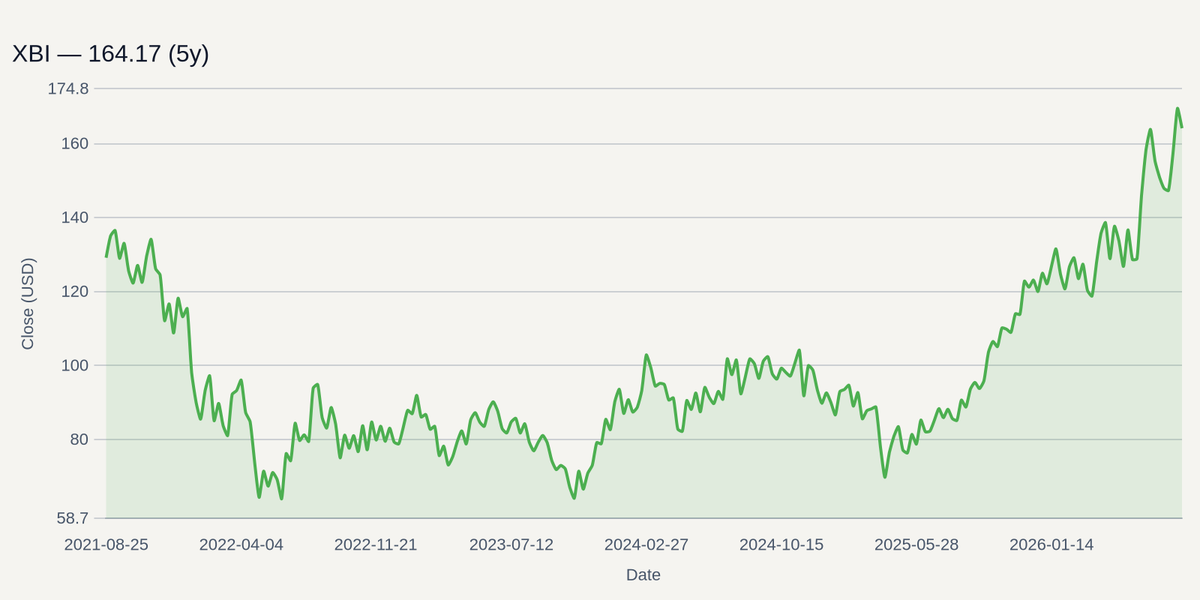
The AI Pick-and-Shovel Trade
The mechanics of this outsourcing cycle have fundamentally changed. Traditional wet-lab trial and error is being replaced by computational biology, triggering a structural capital expenditure cycle for life sciences tools. Companies founded explicitly to accelerate drug development via machine learning are now maturing into clinical-stage enterprises .
This modernization aims to drastically reduce research costs, shifting the value to software and data providers. Generative AI drug creators like ABSI and computational software platforms like SDGR sit at the center of this transition. Meanwhile, legacy genomics equipment providers such as ILMN and TXG are supplying the high-resolution foundational data required to train these complex biological models.

The Liquidity Trap for Early Formation
The structural headwind: Despite the euphoria surrounding artificial intelligence, early-stage biotechnology venture funding is facing a severe bottleneck. The broader tech AI boom is absorbing a massive share of deep-tech risk capital, leaving traditional early formation biotech funding lagging as limited partners reallocate their portfolios .
Venture capitalists have liquidity, but they are deploying it with ruthless selectivity, demanding pristine management teams and fully derisked platforms . This capital starvation forces early-stage operators to prioritize immediate licensing upfront payments rather than relying on robust venture rounds to create enterprise value . For investors, this creates a barbell effect: immense premiums for derisked targets, and existential going-concern risks for sub-scale micro-caps.
Sizing the 2026 Catalyst Window
The transmission mechanism for this thesis runs directly through the upcoming quarterly prints and clinical data readouts. The European Society for Medical Oncology (ESMO) Congress in October 2026 will serve as the first major proving ground. AI-native firms like RXRX must demonstrate the real-world pipeline speed and efficacy of their computational discovery platforms to justify their inflated multiples.
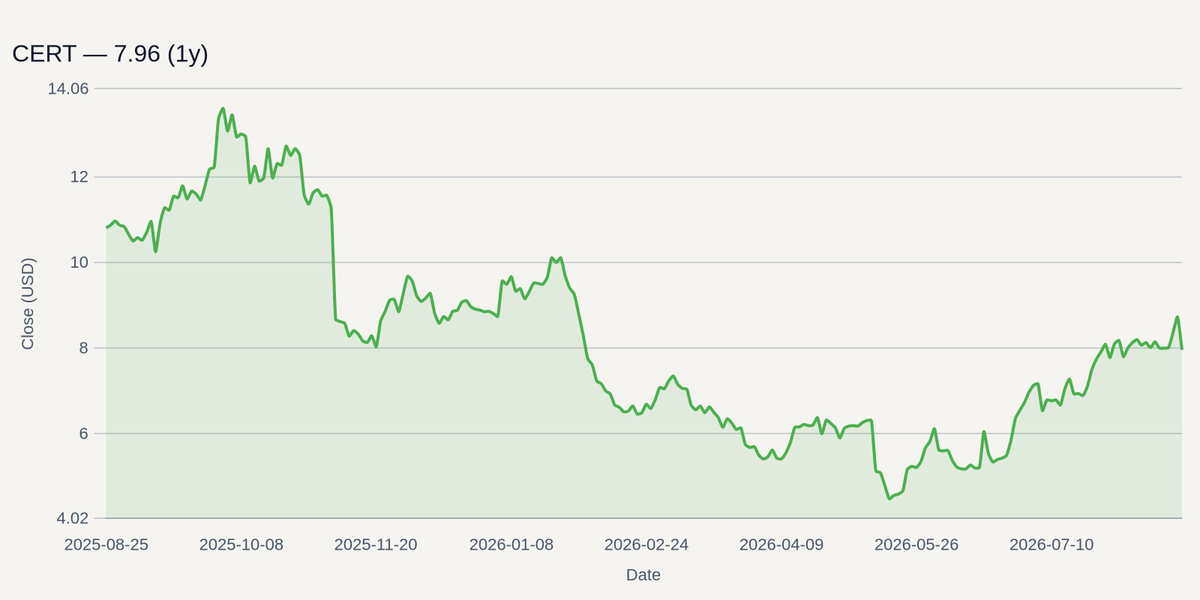
Why it matters: Third-quarter earnings will reveal whether this thematic hype is translating into actual forward order backlogs for software providers like CERT. Its November earnings print will require an aggressive guidance raise to validate new technology investments, with modeled targets implying a swift multiple compression if operating cash flows stall. Looking ahead, the JP Morgan Healthcare Conference in January 2027 looms as the definitive clearing event for the next wave of strategic licensing and buyout bids.