
The physical limits of standard data center architecture are finally colliding with the ambition of next-generation silicon. For two decades, cooling a server farm was a brute-force exercise in moving cold air. Operators built raised floors, spun up massive air conditioning units, and blew chilled air through the racks. But air has a thermodynamic speed limit, and modern parallel processing just shattered it.
The Thermodynamics of Compute
To understand the bottleneck, look at rack density. A traditional enterprise server rack hums along at 10 to 15 kilowatts (kW) of power. Standard air cooling handles this comfortably. But as hyperscalers rack up dense configurations of advanced GPUs, those cabinets are crossing 100kW to 120kW per rack. At that density, fans physically cannot push enough air across the heat sinks to prevent thermal throttling.
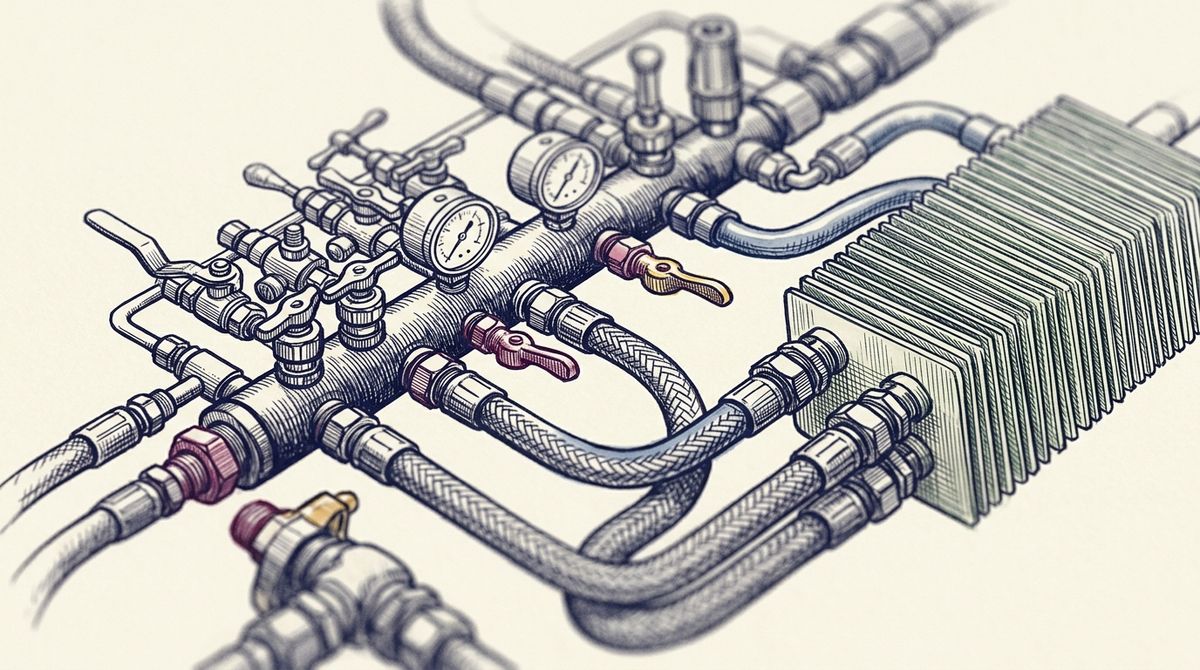
Data center power consumption is accelerating at a pace that is rewiring local grids across major tech hubs . The industry is being forced into direct-to-chip liquid cooling (where cold plates sit directly on the processor) and rear-door heat exchangers. Water is roughly 3,000 times more effective at transferring heat than air by volume. This isn't an optional upgrade; it is a hard physical prerequisite for the next generation of compute.
Retrofit Friction and the Capex Wall
The transition is fundamentally messy. You cannot simply pipe water into a legacy data center designed for air cooling without massive structural overhauls. Floor load capacities must increase to support the heavy liquid loops. The plumbing requires secondary leak-detection networks (because mixing pressurized water and $300,000 compute clusters demands institutional paranoia).
This creates a severe bifurcation in the real estate market. Older facilities risk becoming stranded assets for high-performance workloads, while greenfield builds are being custom-engineered around liquid loops from day one. Capital expenditures are rotating aggressively toward specialized thermal management providers.
Sizing the Thermal Value Chain
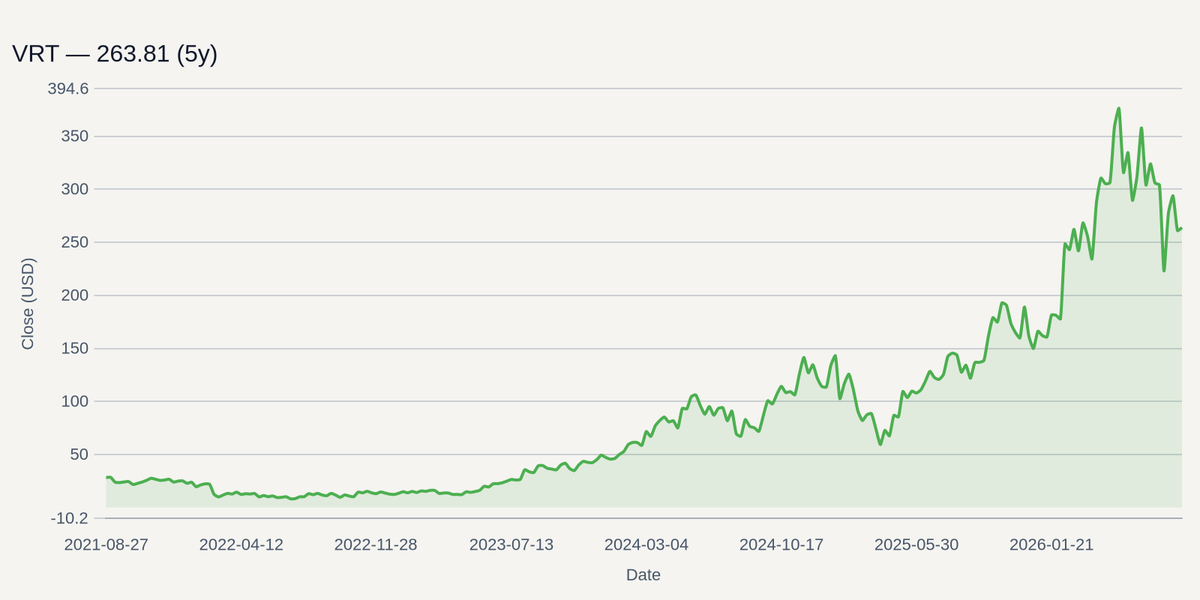
The hardware pivot: The companies supplying the picks and shovels for this thermal transition sit in a highly consolidated market. Players like VRT and NVT dominate the high-density enclosure and direct-to-chip cooling infrastructure. Their unit economics are transforming from selling commoditized sheet metal to installing high-margin, mission-critical thermal networks.
The installation squeeze: Delivering the hardware is only half the battle. Designing and integrating these liquid loops requires specialized mechanical engineering talent that is currently in systemic shortage. Operators are bidding up the price of system integrators just to get their new clusters online.
If there is a structural risk to this supercycle, it lies in the eventual adoption of entirely new substrate materials or optical interconnects that radically lower power consumption at the chip level. But for the next three to five years, the laws of thermodynamics dictate a simple reality: whoever controls the cold water controls the compute scale. Scouter's Data Center Infrastructure trend metrics show the capital momentum is entirely focused on breaking this thermal wall.