
The upcoming trading week zeroes in on the structural plumbing of Financials, offering a crucial temperature check on regional bank net interest margins and insurance underwriting discipline. After navigating early-year rate volatility and shifting capital requirements, these institutions face immediate earnings tests to prove that their balance sheets can handle a normalized mid-3% Fed funds environment.
We are watching three Scouter Top Ideas with catalysts landing this week, focusing on how modeled probabilities map against realized loan growth and combined ratios.
Orange County Bancorp: Testing the Deposit Floor
OBT steps up to the plate on Monday, August 10, 2026, delivering a Q2 print that will be heavily scrutinized for loan growth and deposit stability. Following a mixed first-quarter report that saw a 5.03% year-over-year revenue dip, investors need to see evidence that funding costs have peaked and loan pipelines are normalizing. Against a 3.63% Fed funds backdrop and expected regulatory easing, the bank must actually prove its net interest margin is expanding.
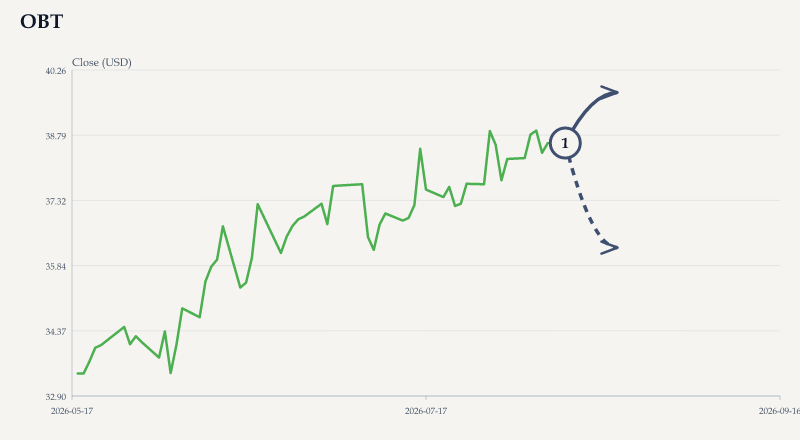
With a historical tendency to beat expectations—running a 75% base rate over recent quarters—strong execution against the $0.87 EPS standard set in the year-ago quarter clears the path to our modeled $39.75 bull target. The setup's outcome window resolves by Wednesday, August 19, 2026. Failure to satisfy those growth expectations would likely drag shares toward the $36.25 bear fallback, penalizing any continued top-line contraction.
Presurance Holdings: The Combined Ratio Turning Point
Mid-week shifts the focus to property and casualty insurance, with PRHI reporting on Wednesday, August 12, 2026. The Q2 print serves as a critical check on whether positive Q1 net income was a durable turnaround or a brief anomaly. Investors are inherently cautious here, digesting a broader 38.5% top-line contraction and a trailing -$8.3 million operating cash outflow over recent quarters.
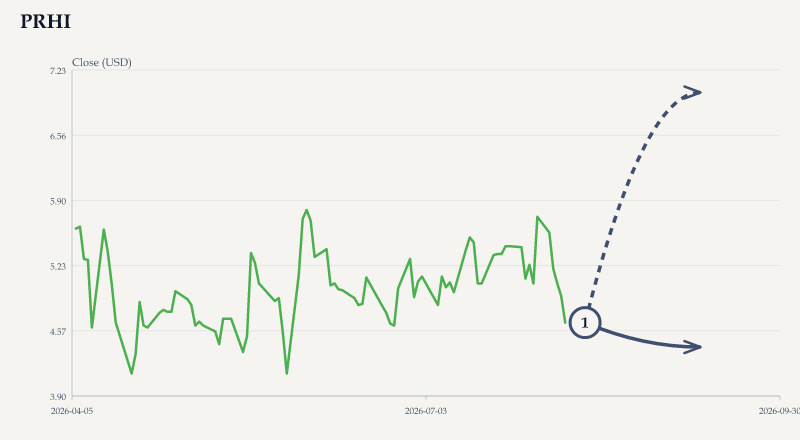
The catalyst for PRHI is pure combined ratio visibility. A demonstrated stabilization in underwriting quality and reduced cash burn could re-rate the stock to a modeled $7.00 by the time the outcome window closes on Thursday, September 10, 2026. Conversely, if top-line contraction is accompanied by rising loss ratios and liquidity concerns, the stock risks a sharp reversion to $4.40.
Texas Community Bancshares: Stress-Testing the CRE Book
Rounding out the week, TCBS drops its Q2 results on Thursday, August 13, 2026, with street scrutiny highly concentrated on the underlying health of its Texas commercial real estate portfolio. Regional banks face a 44.7% historical bull share when stress-testing CRE portfolios, but TCBS has demonstrated operational resilience with a steady $0.29 EPS baseline over recent quarters.
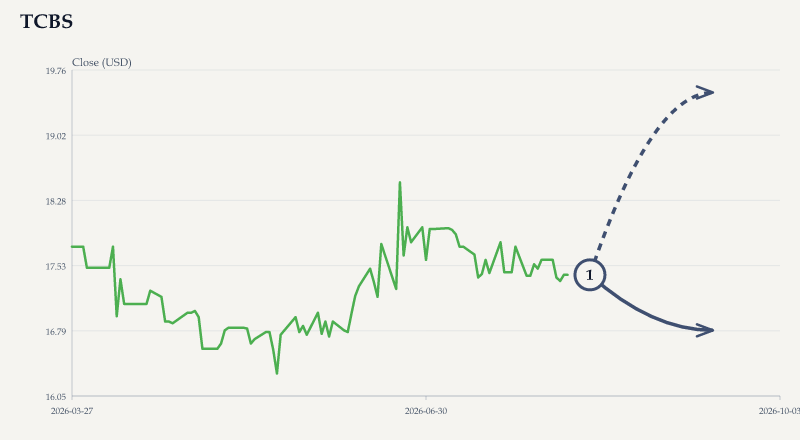
The market wants confirmation that the bank is effectively managing deposit costs while containing non-performing asset trends. An in-line print that reaffirms credit health supports our modeled $19.50 target through the setup's resolution on Tuesday, September 15, 2026. If management instead signals higher provision expenses or lingering deposit cost pressures, the equity could rapidly re-rate to the $16.80 floor.
Valuing the Balance Sheet Checkpoint
This week's catalyst slate is less about headline revenue expansion and entirely about proving downside protection. For Regional Banks, the primary mandate is demonstrating that commercial real estate exposure is cleanly provisioned and deposit betas have plateaued. For the underwriters, it comes down to proving that catastrophic risk retention is properly priced into the premium base.
Institutions that can cleanly navigate these structural hurdles will likely earn a valuation premium as the market digests the current rate regime. Those that show cracks in their fundamental architecture will face immediate, unforgiving margin compression.