Konecranes and the Port Automation Backlog
Konecranes (KNCRF) trades at a steep discount to its peers despite maintaining a massive backlog in port automation projects. The real test of that valuation lands on Thursday, September 10, 2026, when new trade policies and tariff adjustments officially take effect. Investors are watching to see if global supply chain frictions will eat into industrial demand, or if port infrastructure upgrades are effectively immune to the geopolitical noise.
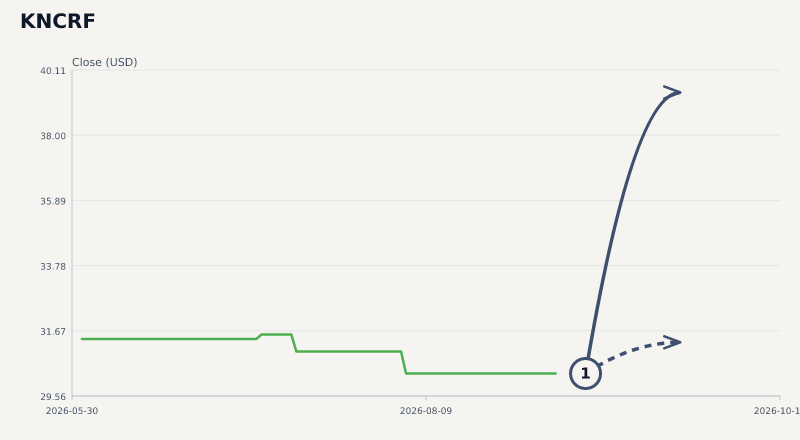
Scouter's modeling tracks the outcome window through Tuesday, September 29, 2026, flagging a modeled bull target of $39.38 if macro indicators support a constructive environment for industrials. The bear floor sits at $31.30, a level that reflects severe margin compression from escalating input costs. Historical data for macro-sensitive industrial setups shows a balanced mix of reactions, meaning execution on that existing backlog will ultimately dictate the direction.
Carter's and the Apparel Supply Chain
The retail sector faces an identical geopolitical headache, and Carter's (CRI) is a prime proxy for testing consumer resilience against rising import costs. The company faces its own fall apparel pricing and tariff update on Thursday, September 10, 2026. Last quarter, strong wholesale and direct-to-consumer gains managed to offset tariff pressures, but the market is looking for evidence that those margins can survive the holiday inventory buildup.

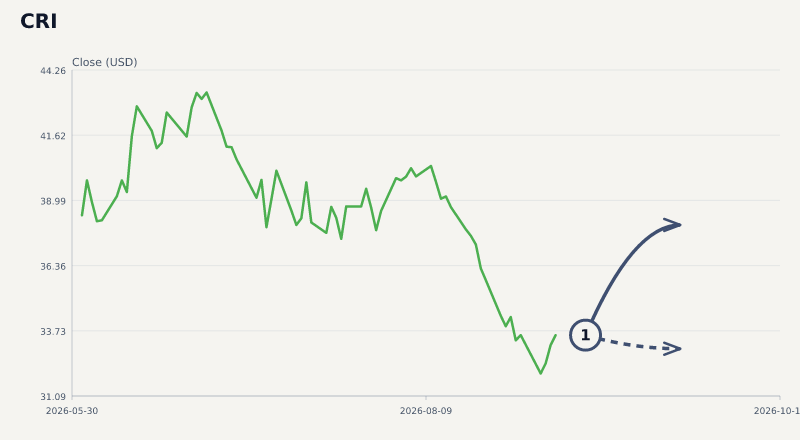
The catalyst window resolves on Tuesday, September 29, 2026, mapping a modeled upside target of $38.00 if pricing power holds up against the broader macro backdrop. A breakdown below the $33.00 bear floor becomes a real risk if back-to-school demand fails to absorb the higher supply chain costs. Our historical tracking of these macro-sensitive events suggests the market is highly reactive here, with aggressive repricing tied directly to gross margin defense.
Minas Gerais and Emerging Market Yields
Moving away from direct trade policy, the Energy Co of Minas Gerais (CIG) offers a different flavor of cross-border exposure in the Brazilian electric services market. The utility is scheduled for its Q3 2026 earnings release on Tuesday, September 8, 2026. State-controlled utilities are notoriously tricky to model, but investors are hunting for insight into operational performance and potential regulatory shifts affecting capacity.
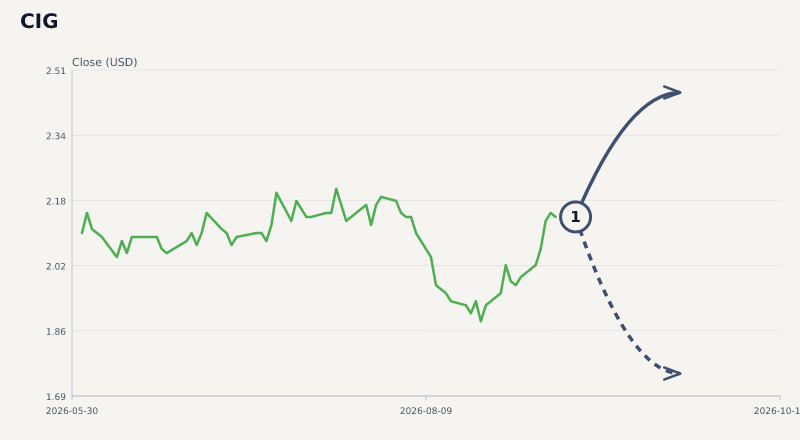
Scouter tracks a bullish scenario toward $2.45 if management delivers a clean operational print and solid forward guidance. The bear scenario risks a slide toward $1.75 if regulatory headwinds or regional macro instability compress earnings. Historically, earnings releases in this specific energy sub-sector yield a median path change of nearly 7%, highlighting that emerging market utilities carry far more price volatility than their domestic counterparts.
Mapping the Cross-Border Reality
This week’s slate of events forces investors to underwrite the exact cost of doing business across borders. Whether it is moving heavy machinery into automated ports, importing fall apparel for retail distribution, or managing utility infrastructure in an emerging market, the prevailing theme is margin defense. The market is largely exhausted by theoretical tariff debates and is now demanding hard proof of who can pass those costs along.
As these setups resolve through the end of the month, the divergence between companies that can protect their unit economics and those absorbing the geopolitical tax will become obvious. Tracking these specific event windows helps you assess which sectors have genuinely priced in the friction, and which balance sheets remain dangerously exposed.