
Global supply chains are fracturing again, but the pain is not distributed equally. While headline manufacturers scramble for parts, a specific cohort of logistics providers, aerospace suppliers, and specialized tech vendors are finding themselves with sudden pricing power. This week’s catalyst slate tests exactly who is successfully monetizing these disruptions and who is merely absorbing the costs.
Amprius and the Aviation Battery Bottleneck
The market has been waiting for AMPX to clear its liquidity overhang, and with the recent capital raise in the rearview mirror, the focus finally shifts back to core execution. The company steps to the plate for its Q3 2026 Earnings Release on Wednesday, November 11, 2026, where the primary debate will center on order book expansion for its high-density silicon-anode cells. These batteries are highly relevant for next-generation aviation and EV supply chains, which are currently desperate for domestic, high-performance components.
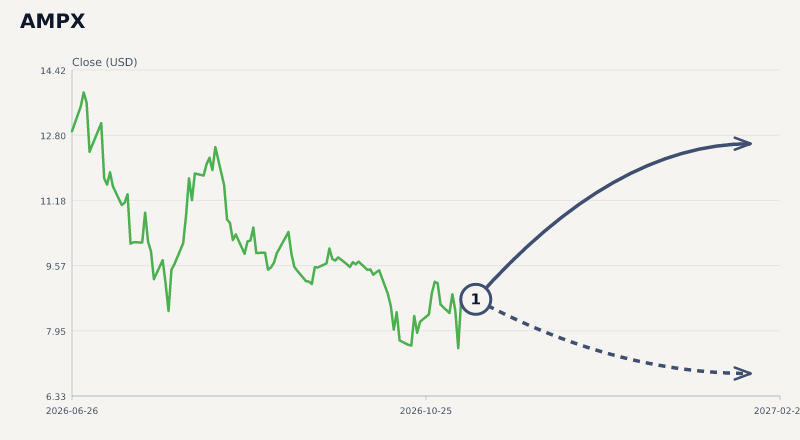
Scouter’s modeling outlines a bullish target of $12.59 if production ramps stay on schedule and backlog expands. Because micro-cap industrials often trade with low-float mechanics, a clean quarter can drive a non-linear upward re-rating. However, any execution missteps in an already fragile supply chain environment would likely test the $6.89 fallback, making this print a crucial binary test of management's ability to scale operations.
Clearfield’s Margin Test Under Tariff Pressure
Connectivity hardware is rarely immune to macro friction, and CLFD has been navigating a particularly thorny maze of tariff risks and guidance resets. The company reports Q4 2026 earnings on Tuesday, November 10, 2026, offering a real-time health check on broadband deployment and data center supply chains. Investors are eager to see if the recent guidance cut fully de-risked the quarter or if external cost pressures are still bleeding into gross margins.
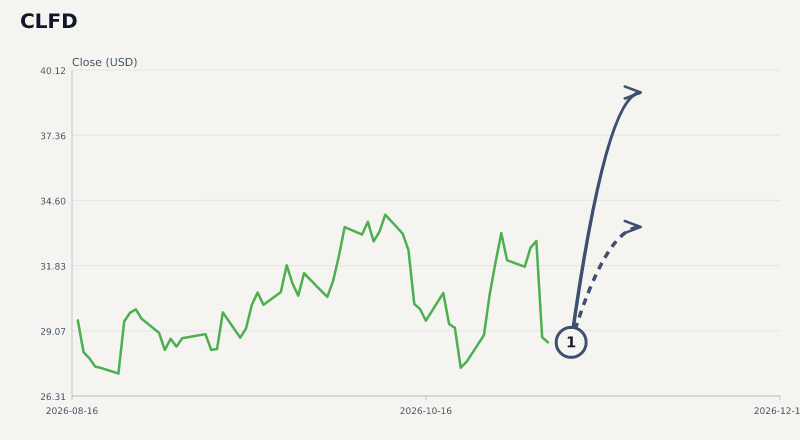
Our base case points to a $39.17 target if forward-looking commentary shows stabilization and an ability to pass costs along to customers. Infrastructure firms exposed to strategic funding often exhibit high-magnitude moves, but they require flawless operational efficiency to justify their multiples. If Clearfield struggles to absorb supply chain costs or navigate tariff headwinds, the downside scenario models a floor near $33.47.
LightPath Technologies and Defense Optics
Defense and industrial photonics are operating in a heavily constrained procurement environment, which puts an immediate premium on reliable suppliers. LPTH will deliver its Q1 FY2027 earnings on Tuesday, November 10, 2026, pivoting the narrative from sheer cost control to actual top-line growth. The market is measuring how well the company is navigating trade policy shifts that directly impact its component sourcing and contract backlog.
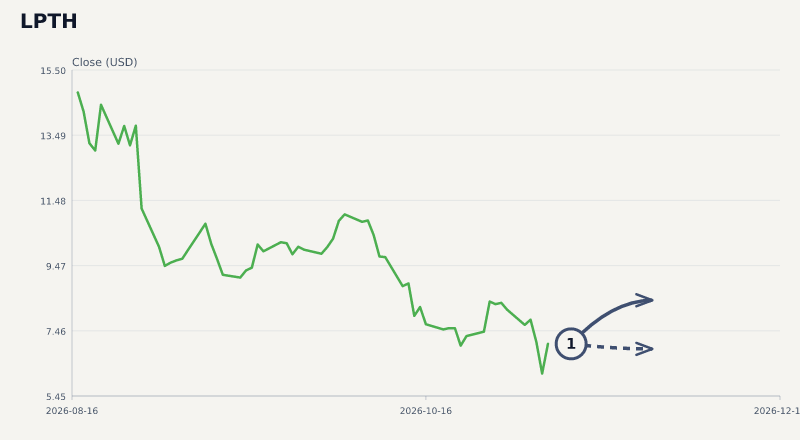
With duration and rates channel sensitivity running high, the resolution will likely be dominated by the guidance reset and margin commentary. Scouter's catalyst engine projects a bull target of $8.40 if LightPath proves it can deliver revenue expansion despite regulatory hurdles in the defense sector. Conversely, a failure to convert its backlog effectively could see shares derate toward the $6.90 bear floor.
Monetizing the Logistics Chokepoint
The broader takeaway from this week's Industrials and tech setups is that supply chain friction is no longer a valid excuse for margin compression—it is the baseline operating environment. Companies that can guarantee delivery timelines and secure domestic sourcing are effectively taxing their downstream customers for that reliability.
This dynamic is driving the sharpest moves across the Airlines & Passenger Aviation theme, where hardware shortages have artificially capped capacity and boosted yields. As these earnings prints resolve, the market will aggressively separate the structural winners with pricing power from the vendors trapped absorbing inflation.